
Technology and
ERP Selection
ERP Selection is Too Important to Leave to Chance
Pemeco brings discipline, objectivity, and a methodology built to support strategy and execution.
High-stakes system decisions demand more than demos and feature lists. Pemeco applies a proven, vendor-neutral methodology that treats ERP selection as a business-critical discipline. We guide clients through a structured process that starts with clearly defined objectives and ends with execution-ready outcomes.
Our approach includes building tailored vendor lists, filtering out poor-fit options, and evaluating finalists using the 8 Dimensions of Vendor Fit. We scope implementation requirements early to minimize risk and improve downstream performance.
Our ERP and Technology Selection Methodology
Proven in 800+ selection projects across 40 countries with a 100% success rate. This structured 6-stage methodology de-risks high-stakes ERP and enterprise technology decisions.
01 Assessment
Define business goals, process needs, and technical requirements. Set a strong foundation for selection and execution.
02 Vendor Listing
Build a tailored list of high-fit technology candidates based on market research and industry insight.
03 Vendor Prequalification
Eliminate poor-fit vendors early by testing them against mission-critical and differentiating requirements.
04 Vendor Due Diligence
Evaluate finalists using our 8 Dimensions of Vendor Fit to identify the strongest technology and service partners.
05 Implementation Scoping
Work with top vendors to define the delivery scope so contracts reflect real project needs.
06 Contract Negotiations and Technology Selection
Lead negotiations that reduce risk, accelerate ROI, and lock in long-term value with the chosen provider.
Pemeco’s 8 Dimensions of Vendor Fit
Selecting the right vendor isn’t just about functionality. Our due diligence framework evaluates each finalist across eight dimensions—including technical architecture, delivery model, and cultural alignment—to ensure long-term fit and implementation success.
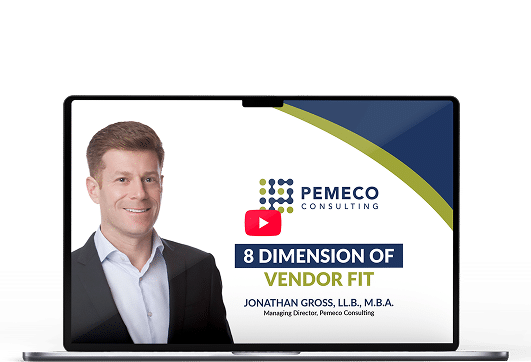
See how Pemeco applies the 8 Dimensions of Vendor Fit to evaluate vendors beyond demos and feature lists.
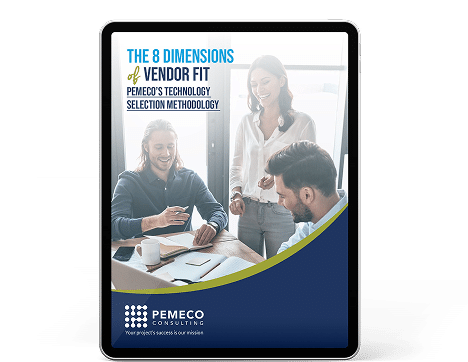
Dive deeper into the full framework. Learn what each dimension means, why it matters, and how to apply the model in your own ERP or enterprise technology selection.

Discover how Kalmbach Feeds successfully selected a new ERP system to support multi-company growth, achieving a 23% reduction in software and services costs.
Real Results From
Complex ERP Selections

If you want to pick the right ERP system and if you want an approach that’s tailored to your business, hire Pemeco. They give you an absolutely tailored approach to your business and they deliver a ton of value in negotiating with vendors. I don’t know how you can find another firm that does what they do.
Paul Kalmbach
President of Kalmbach Feeds
Resources
Do you need an industy-specific ERP?

Frequently Asked Questions
You should define goals, document requirements, and assign a project lead before starting ERP selection. Preparation typically includes:
- Engaging stakeholders and confirming governance
- Drafting a high-level project plan with budget and timeline
- Documenting current and future-state processes
- Preparing data models and process flows for vendor evaluation
📌 Download Pemeco’s ERP Selection & Readiness Checklist.
ERP vendors should be evaluated across eight key dimensions of fit:
- Functional fit
- Technical architecture
- Industry alignment
- Vendor viability and roadmap
- Implementation methodology
- Total cost of ownership
- Support and services
- Cultural alignment
📌Download the full guide with 8 Dimensions of Vendor Fit.
📌 See Pemeco’s Ultimate ERP Selection Guide for evaluation scorecards.
ERP evaluation should be a structured process rooted in business requirements. Effective methods include:
- Issuing structured RFPs
- Running scripted demonstrations
- Conducting reference checks
- Applying weighted scoring models
- Completing commercial due diligence
📌 Explore Pemeco’s ERP Selection Methodology to see our proven approach.
ERP selection usually takes 3–6 months. Smaller companies may finish faster, while global or complex organizations often take longer due to requirements gathering, vendor demos, and due diligence.
📌 Watch this video to learn more: “Why does it take that long to implement an ERP?”
Upgrade paths may save 20–25% on time and cost, but they rarely close capability gaps or deliver modern functionality.
In many cases, replacement offers greater long-term value, scalability, and lower lifetime cost than repeatedly patching an outdated system.
Key factors to weigh include:
- Vendor support lifecycle and product roadmap
- Upgrade cost vs. replacement Total Cost of Ownership (TCO)
- Scalability, integrations, and user experience
- Risks of remaining locked into obsolete technology
📌 Use Pemeco’s ERP Upgrade vs. Replace Checklist to compare project risk, cost, and business fit.
Engage an independent ERP consultant when vendor agendas, complexity, or internal bias put ERP success at risk. The right partner should be:
- Vendor-neutral and proven across many ERP platforms
- Deeply experienced in your industry and processes
- Referenceable and unbiased, without a pattern of recommending the same system
Pemeco has led 800+ successful ERP projects across North America and globally, delivering frameworks anchored in client objectives, not vendor commissions.
Yes — because Pemeco’s clients typically realize financial benefits far exceeding our fees. The value drivers include:
- Vendor negotiations that often secure savings greater than our advisory costs
- Accelerated decision-making that avoids project delays
- Selecting an ERP that delivers measurable ROI
- Reducing risk of implementation failure — which can cost tens of millions
📌 See case studies on how Pemeco delivers net financial benefits.
ERP costs depend on deployment model, user count, complexity, and support needs. Key cost drivers include:
- Cloud vs. on-premise deployment
- Number of users, sites, and modules
- Integration and customization requirements
- Ongoing support, upgrades, and training
- Incidental costs such as internal staffing, hardware, and third-party software
📌 Watch our “Beyond ERP” webinar for full TCO insights.
ERP ROI is calculated by comparing lifetime benefits to total costs. Benefits include:
- Productivity gains from automation and streamlined workflows
- Reduced operating costs (labor, inventory, compliance)
- Faster decision-making with real-time analytics
- Revenue growth through improved customer service and time-to-market
Costs must account for:
- Licensing and implementation services
- Training and change management
- Ongoing support, upgrades, and maintenance
- Incidental costs such as internal staffing, data cleansing, and integration software
Pemeco Consulting’s ROI modeling tools and TCO framework ensure executives present a defensible, board-ready business case.
📌 Read our ERP ROI Analysis guide to strengthen your business case.
Talk to a Business and Technology Advisor
From Planning to Cutover